Choosing the right range hood involves understanding your kitchen’s needs, common mistakes to avoid, key features to compare, and maintenance considerations.
Choosing the right range hood is a crucial decision that can significantly impact both the functionality of your cooking space and its aesthetic appeal. With numerous models available on the market today, ranging from basic exhaust fans to high-end ventilation systems with advanced filtration technologies, it’s easy for consumers to feel overwhelmed by the options. This guide aims to simplify this process, helping you navigate through common pitfalls and make an informed decision based on your specific requirements.
Why Choosing Range Hoods is Difficult Selecting a range hood can be challenging due to several factors. First, there are various types of range hoods available—such as wall-mounted units, island models, and downdraft systems—that cater to different kitchen layouts and ventilation needs. Second, the performance metrics like CFM (cubic feet per minute) ratings vary widely among brands, making it difficult for buyers without technical knowledge to compare effectively. Lastly, personal preferences in design aesthetics play a significant role, as range hoods are often visible fixtures that complement or contrast with other kitchen elements.
Common Buyer Mistakes One common mistake is focusing solely on the CFM rating when choosing a range hood, which can lead to overlooking important factors such as noise levels and filtration efficiency. Another frequent error is purchasing a unit based purely on its appearance without considering compatibility issues like clearance requirements above cooktops or ducting constraints for vented models.
Key Features Buyers Should Compare When shopping for range hoods, it’s essential to compare several key features:
CFM Rating: Determines the hood’s ability to remove smoke and cooking odors.
Noise Level: A quieter unit is more pleasant during use but may not be as powerful in terms of CFM.
Filtration System: Some models come with charcoal filters for odor control, while others offer reusable metal mesh filters that are easier to clean.
Real-world Use Experience and Expectations In practical applications, range hoods vary widely in their effectiveness. For instance, a high-CFM unit might excel at clearing smoke but could be excessively noisy during operation. Conversely, quieter models with lower CFM ratings may struggle under heavy cooking conditions like deep-frying or grilling.
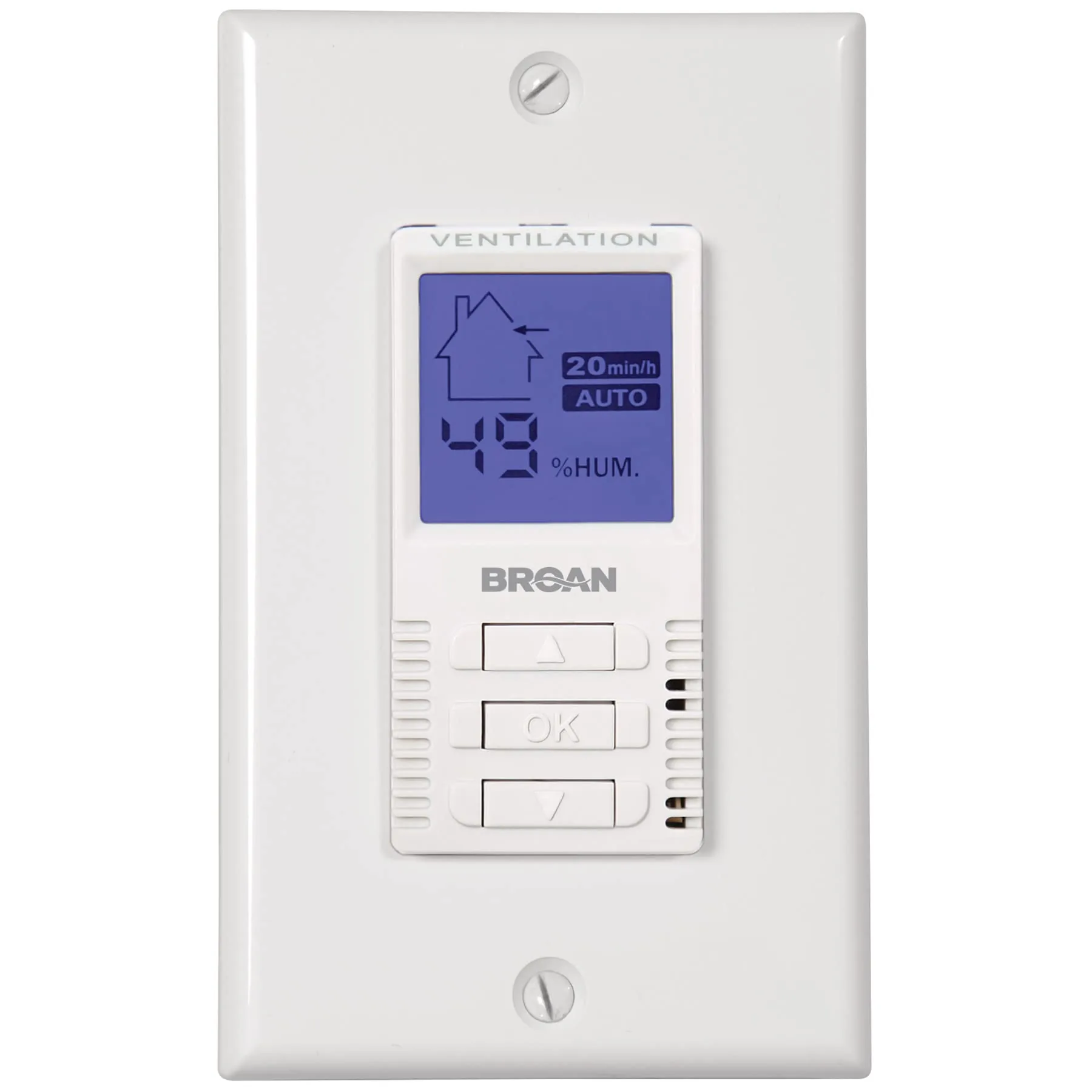
Where This Product Fits (Strengths & Weaknesses) While the Broan VT7 Wall Control is designed to complement ERV and HRV units from The Deco-Touch Series, its primary strength lies in integrating seamlessly into existing ventilation systems rather than functioning independently as a range hood. Its weaknesses include limited standalone functionality for kitchen exhaust needs.
Who Should Avoid This Product Homeowners looking for an all-inclusive solution for their cooking area’s air quality management should look elsewhere since the Broan VT7 Wall Control is not designed to serve this purpose directly. It’s best suited for those already invested in a compatible ventilation system who wish to enhance control and monitoring capabilities.
Comparison with Alternative Options in the Same Category When compared to other range hood models, such as standalone units from brands like Blomberg or Bosch, the Broan VT7 Wall Control falls short due to its specialized nature. Standalone options offer more comprehensive solutions for kitchen ventilation needs without requiring additional system compatibility considerations.
Maintenance and Long-term Considerations Regular maintenance is crucial for any range hood’s longevity and performance. This includes cleaning filters according to manufacturer guidelines and ensuring proper ductwork integrity if applicable. Overlooking these aspects can lead to decreased efficiency over time, impacting both air quality control and noise levels during operation.
Is It Worth Investing in a Range Hood with Advanced Filtration?
For those prioritizing odor removal alongside smoke extraction, investing in models equipped with advanced filtration systems is worthwhile despite higher costs upfront. These units provide better indoor air quality by capturing more particulates than basic exhaust fans alone can manage.
How Do I Determine the Right CFM Rating for My Kitchen Range Hood?
The ideal CFM rating depends on your cooktop size and cooking habits. A general guideline suggests a minimum of 100 CFM per linear foot of stove width, but this may vary based on specific kitchen dynamics like ceiling height or proximity to windows.
What Are the Pros and Cons of Ductless Range Hoods?
Ductless range hoods offer flexibility in installation without requiring external ducting. However, they rely more heavily on filtration systems for odor control, which can necessitate regular filter replacements compared to vented models that simply exhaust air outside.
Final Neutral Thoughts Selecting the right range hood involves balancing performance needs with aesthetic preferences and practical constraints like kitchen layout and existing ventilation infrastructure. By carefully evaluating key features and understanding potential trade-offs, homeowners can make a well-informed decision tailored to their specific requirements.